From product features to a clearer desk organizer ad
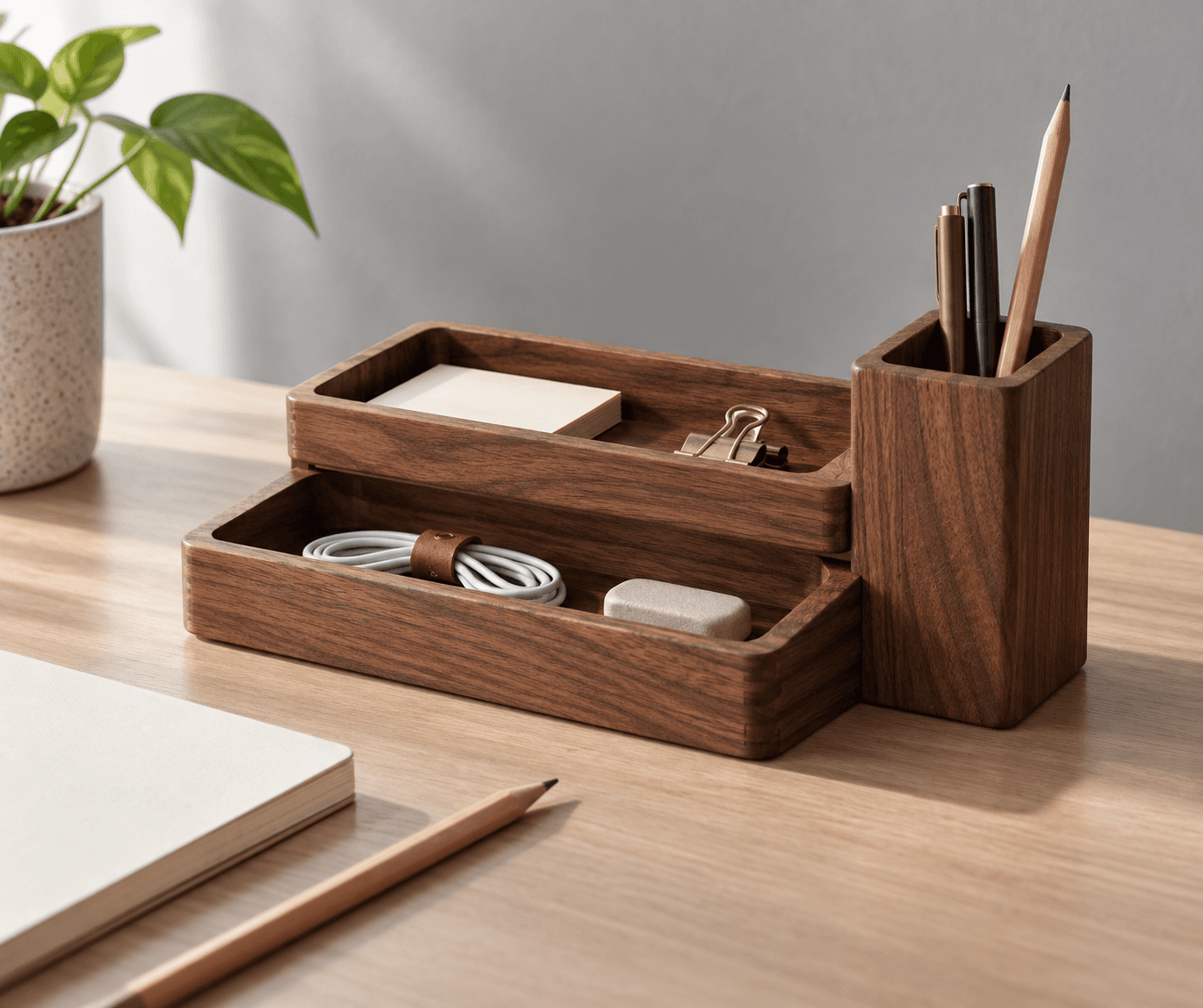
A compact desk organizer has several physical features. This example shows how to turn them into focused search-ad directions without promising a productivity result.
Define the real job.
A feature list alone can sound like a catalog. The shop needs short, specific wording for a shopper already searching for desk storage, while avoiding a promise that the product will improve productivity.
- Business / product
- A compact wood-tone desk organizer
- Product benefits
- Two shallow trays for small items, an upright pen compartment, and a compact footprint.
- Target audience
- People looking for practical storage on a smaller desk.
- Advertising platform
- Google Ads
- Tone
- Clear and direct
Tool benefit: These five fields keep every later option tied to the same product facts and intended audience.
Choose what the ad should lead with.
Instead of committing to the first line, look at three different ways into the same brief.
A place for small things
Explain the basic organization job using the trays and pen slot.
Fits a smaller workspace
Lead with the compact footprint for a specific shopping need.
One organizer, several zones
Show how the separate compartments can group everyday desk items.
Why this direction: This is the broadest useful answer to a desk organizer search. It describes what the object does before adding its compact size as supporting detail.
Build a set of choices.
The AIToolStack format separates hooks, longer text, headlines, and CTAs. Below is a full sample set matching the generator's output counts, prepared for this demonstration.
Ten hooks
- 01Give the little desk items a place.Selected
- 02Small desk? Start with the small things.
- 03Pens here. Notes there.
- 04A simpler spot for everyday desk pieces.
- 05Keep the surface ready for your work.
- 06Two trays and a place for pens.
- 07Desk storage without a large footprint.
- 08Make room for the things you use most.
- 09One organizer for the everyday extras.
- 10A little structure for your desktop.
Three primary text drafts
Give the little desk items a place. This compact organizer has two shallow trays and an upright pen compartment. View the layout and dimensions.
A wood-tone desk organizer with two trays and a pen compartment. Explore a practical way to group the small items on your desk.
Looking for desk storage that does not take over the surface? See this organizer's compact layout, trays, and upright pen slot.
Three headlines
- Compact Desk Organizer
- Two Trays, One Pen Slot
- Desk Storage for Small Items
Three CTA ideas
- View dimensions
- See product details
- Explore the organizer
Tool benefit: A structured set makes it easier to compare and recombine parts. It does not decide which claim is true or which ad will perform best.
Make the claim defensible.
One tempting line was removed during editorial review. This is an illustration of the kind of check a person should make, not a quotation from a recorded AI run.
“Double your productivity with a clutter-free desk.”
“Two trays and a place for pens.”
No evidence connects this product to a measurable productivity gain. The revised line returns to the organizer's described structure.
Tool benefit: Keeping the brief beside each variation gives the reviewer a reference point for removing unsupported language.
Pair the words with a visual.
The separate illustrative image makes the two tray levels and pen compartment visible. The site generates text only; the product visual is editorial context.
Tool benefit: The output components can be arranged into a coherent draft, then checked against the actual product image and destination page before publication.
Useful structure, with a person in control.
The angle and headline answer a concrete desk-storage query instead of opening with a vague lifestyle claim.
Hooks, headlines, longer descriptions, and CTAs can be reviewed as separate components before adapting them to an actual placement.
The review step removes an unproven productivity outcome and keeps the ad tied to observable features.
Before a real campaign
- Measure the real product before using “compact” or publishing dimensions.
- Confirm materials and finishes; “wood-tone” does not mean solid wood.
- Adapt text to the exact Google Ads format and current limits before submission.